
Accessibility Testing
Challenge
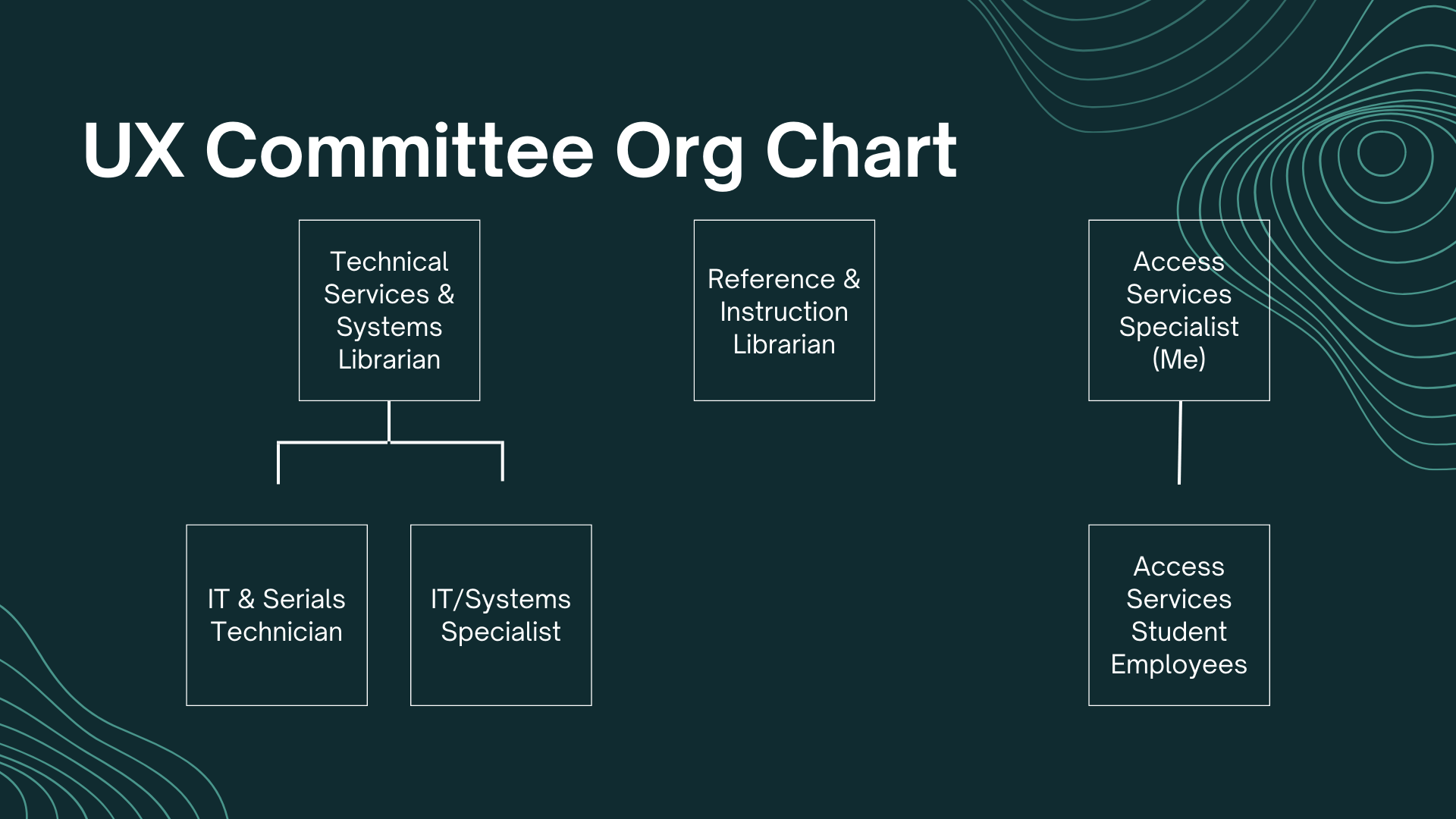
Clark College is a medium-sized community college located in Vancouver, WA near the Washington State School for the Blind and the Washington School for the Deaf. As a result, Clark College has a higher proportion of students with disabilities than comparable schools and encouraged stronger digital accessibility standards than were mandated by the state, such as striving for WCAG AAA compliance instead of AA compliance. By the time I was hired in 2018, the Libraries had convened for several years an internal UX committee of about 5 library employees to work on the complex issues associated with website content to meet these elevated standards, whether the issues originated from external vendors or from our local instance of Drupal CMS. However, the committee struggled to keep up with regular accessibility testing due to staff cuts and participation in a Department of Education Office of Civil Rights' investigation of a complaint filed in 2015 involving library resources.
Role
Starting in 2019 until I left the College in 2022, I served on this committee and contributed to regular maintenance work. Despite my relative unfamiliarity with web development at the time, I wanted to help with the routine accessibility testing to free up my other committee members’ time to work on more complex projects.
Solution
I first evaluated how the committee decided what to test and why by consulting an existing list in a Google Sheet. I realized the testing was mostly predicated on checking for a pass/fail threshold in tools such as Google Lighthouse and checking that specific functions were operational. With modifications to the spreadsheet and minimal training in digital accessibility, the student employees could be trained to take over most of the regular testing. I also structured the testing so that the student employees replicated testing across different browsers and modalities. I also included training in common accessibility tools in the student employees’ onboarding so they would be ready to participate in testing and to field any questions about it in their capacity as public-facing staff.
Impact
This solution not only allowed any given cohort of student employees to get testing experience, but also expanded the overall testing bandwidth. The testing time was reduced by 75% to 3 weeks from the original 12 weeks, and more experienced committee members could focus on resolving the issues that came up during testing instead of just identifying them. As a result of the student employees taking on this critical work, I had the time to redesign the content strategy on the pages related to my area of expertise (library circulation) and to manually rebuild tables throughout the website in HTML to better serve our users with screen readers. By the time I took over as chair of the UX committee in 2021, this improved “bottom-up” understanding of digital accessibility reduced our biweekly meeting times by 50% from 90 to 45 minutes.